
Notable Matches · Historical figures
Árpád Royals of the Székesfehérvár Basilica
Árpád Royals of the Székesfehérvár Basilica (9th–12th century CE · Székesfehérvár, Hungary): published ancient DNA, 5 sequenced genomes, and how close your own Global25 coordinates come — free with every Ancestrify G25 report.
The dossier
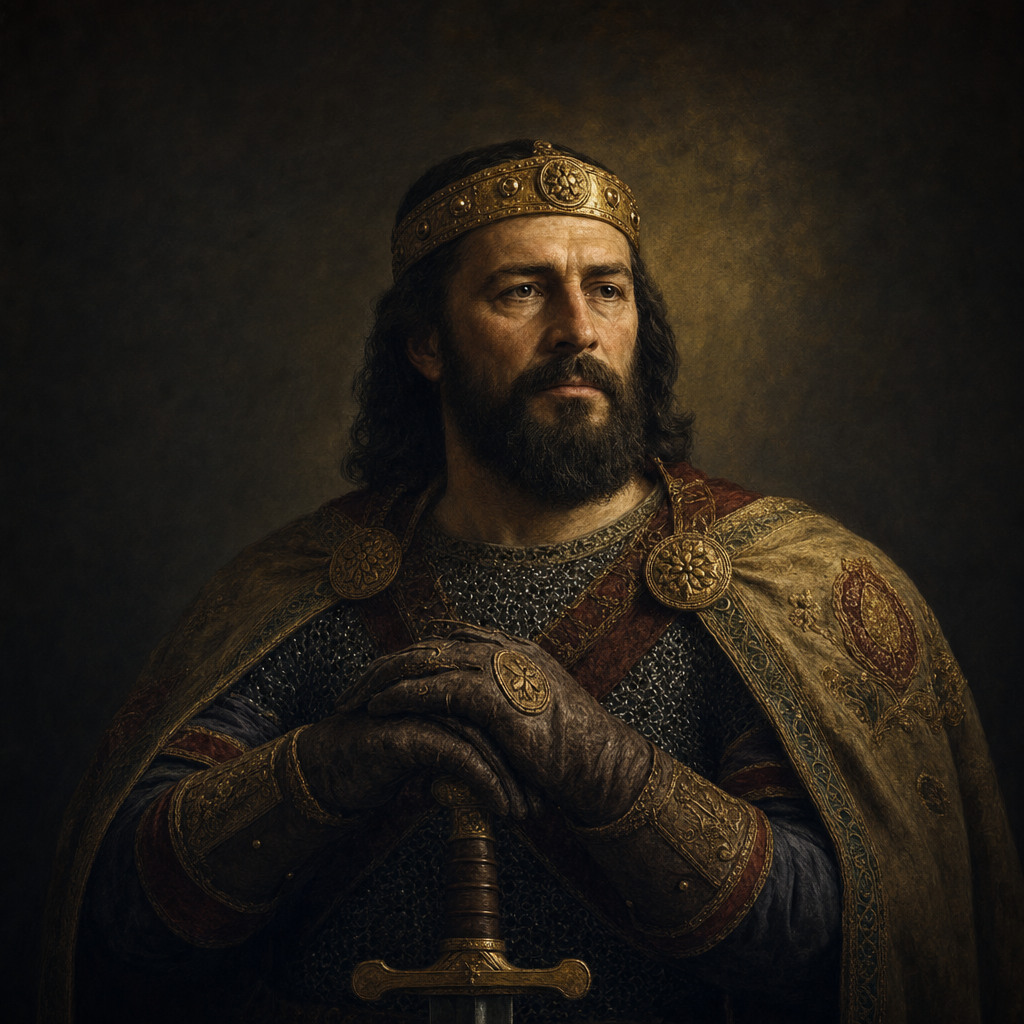
- Catalog tier
- Historical figures
- Period
- 9th–12th century CE
- Found
- Székesfehérvár, Hungary
- Sequenced genomes
- 5 (SZKB58F, MBE-C1, SZKB277, HUF-1, SZKB686F)
Who they were
For five centuries Hungary's kings were crowned and buried in the Royal Basilica of Székesfehérvár, until Ottoman wars scattered their bones into a common ossuary. Genome sequencing of hundreds of ossuary remains has begun returning names to the bones, identifying members of the founding Árpád dynasty — among them King Béla II 'the Blind', blinded in childhood yet crowned in 1131 — and even ninth-century kinsmen of the conquering clan itself.
The genome-wide data behind this entry was published in Genetic identification of Árpád Dynasty members from the ossuary of the Royal Basilica.
How your distance is measured
Every Ancestrify Global25 report includes the free Notable Matches lens: your coordinates are compared to every sequenced member of every catalog entry, and the distance to the closest member is reported — a Euclidean distance in the same 25-dimensional space the Distance lens uses. Because these are a small group of real individuals, not a population average, distances naturally run larger than population distances — that is expected, not a poor result. And one thing is never claimed: a small distance means similar ancestry composition, not that Árpád Royals of the Székesfehérvár Basilica are your ancestor. See how it looks in the live demo or read about the full G25 analysis.
Questions
Who were Árpád Royals of the Székesfehérvár Basilica?
Árpád Royals of the Székesfehérvár Basilica (9th–12th century CE, Székesfehérvár, Hungary) are one of the Historical figures entries in our Notable Matches catalog, represented by 5 sequenced ancient genomes published in the study "Genetic identification of Árpád Dynasty members from the ossuary of the Royal Basilica".
What does "matching" Árpád Royals of the Székesfehérvár Basilica mean?
Your Global25 coordinates are compared to the entry's sequenced members and the distance to the closest one is reported — a Euclidean distance in the same 25-dimensional reference space the Distance lens uses. A notable entry is one person or one small burial group, not a population average, so distances naturally run larger than population distances.
Are they my ancestor?
No — and no DNA test can show that. A small distance means your genome sits near theirs in a shared reference space: similar ancestry composition, not descent. Ancestrify never claims a notable individual is your ancestor or relative.
How do I see my own distance to Árpád Royals of the Székesfehérvár Basilica?
Notable Matches is a free lens on every Ancestrify Global25 report — never sold separately. Order the G25 analysis (29.99 EUR), and your report ranks your coordinates against the full catalog, with a portrait, dossier and map for every entry. The public demo shows the lens with example data.
More from the catalog
The catalog holds every published entry across three tiers — browse the full Notable Matches directory. Nearby entries:
Prince Gleb Svyatoslavich1052–1078 CE
Saint Ladislaus I of Hungary1040–1095 CE
King Béla III of Hungary1148–1196 CE
The Birka Warrior Woman10th century CE
Prince Izyaslav Ingvarevichc. 1180–1223 CE
The Well-man of Sverresborgd. 1197 CE
The Piast Dynasty12th–16th century CE
Duke Béla of Macsó1245–1272 CE
Grand Prince Dmitry Alexandrovich1250–1294 CE
Golden Horde Elite of the Jochi Khan Mausoleum13th–14th century CE
Bishop Teodomiro of Iria Flaviad. 847 CE
The Aba Clan1276–1450 CE