
Notable Matches · Iconic discoveries
The Old Babylonians
The Old Babylonians (c. 1900–1600 BCE · Bakr Awa, Iraq): published ancient DNA, 8 sequenced genomes, and how close your own Global25 coordinates come — free with every Ancestrify G25 report.
The dossier
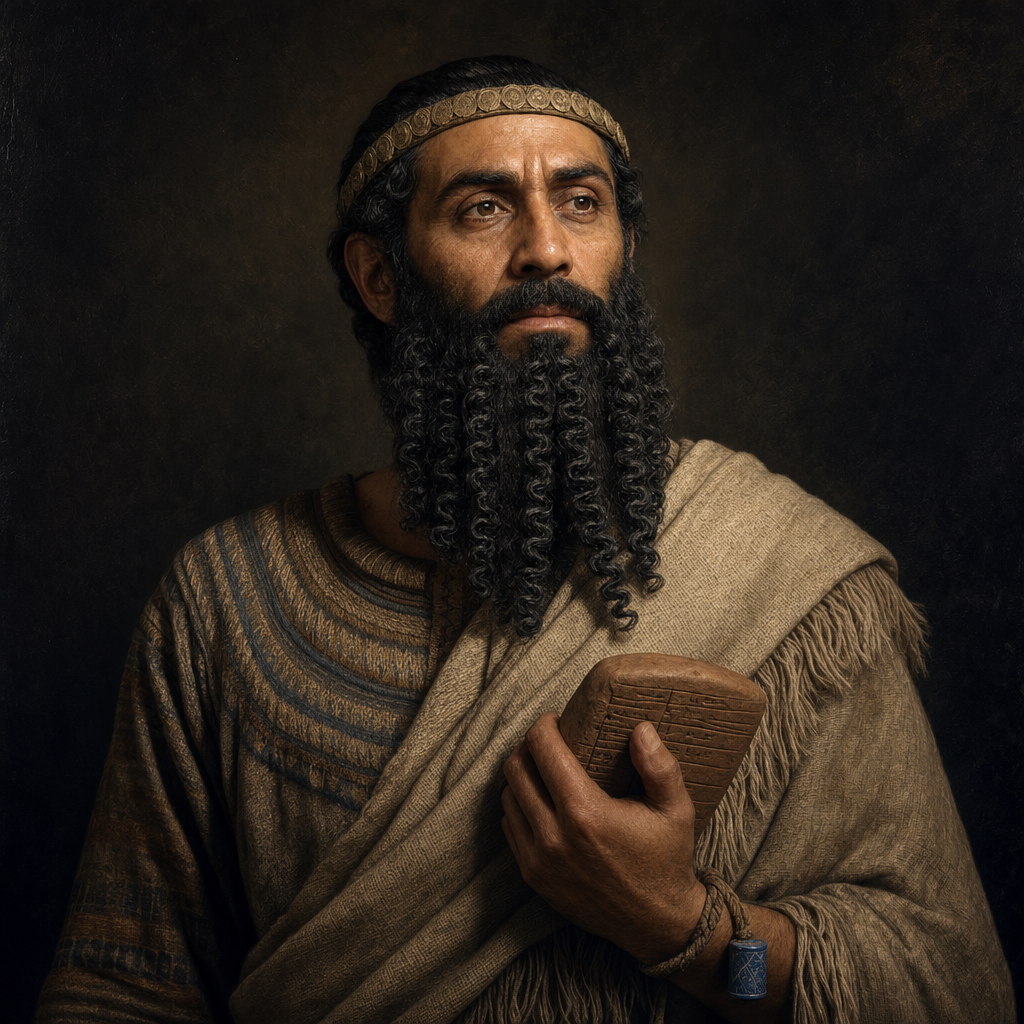
- Catalog tier
- Iconic discoveries
- Period
- c. 1900–1600 BCE
- Found
- Bakr Awa, Iraq
- Sequenced genomes
- 8 (A22040_LP150_04, A22035_LP151_02, A22023_LP150_10, A22036_LP152_04, A22051_LP151_08, A22032_LP150_01, A22043_LP151_04, A22022_LP150_09)
Who they were
These people lived in the age of Hammurabi, when Babylon first rose to rule Mesopotamia and its king carved his laws into stone for all to see. The burials at Bakr Awa, a city mound in the foothills east of the Tigris, belong to that Old Babylonian world of cuneiform contracts, ziggurats and canal-fed barley. They are the catalog's window on ancient Mesopotamia — the civilisation that invented the city itself.
The genome-wide data behind this entry was published in A genetic probe into the ancient and medieval history of Southern Europe and West Asia.
How your distance is measured
Every Ancestrify Global25 report includes the free Notable Matches lens: your coordinates are compared to every sequenced member of every catalog entry, and the distance to the closest member is reported — a Euclidean distance in the same 25-dimensional space the Distance lens uses. Because these are a small group of real individuals, not a population average, distances naturally run larger than population distances — that is expected, not a poor result. And one thing is never claimed: a small distance means similar ancestry composition, not that the Old Babylonians are your ancestor. See how it looks in the live demo or read about the full G25 analysis.
Questions
Who were the Old Babylonians?
The Old Babylonians (c. 1900–1600 BCE, Bakr Awa, Iraq) are one of the Iconic discoveries entries in our Notable Matches catalog, represented by 8 sequenced ancient genomes published in the study "A genetic probe into the ancient and medieval history of Southern Europe and West Asia".
What does "matching" the Old Babylonians mean?
Your Global25 coordinates are compared to the entry's sequenced members and the distance to the closest one is reported — a Euclidean distance in the same 25-dimensional reference space the Distance lens uses. A notable entry is one person or one small burial group, not a population average, so distances naturally run larger than population distances.
Are they my ancestor?
No — and no DNA test can show that. A small distance means your genome sits near theirs in a shared reference space: similar ancestry composition, not descent. Ancestrify never claims a notable individual is your ancestor or relative.
How do I see my own distance to the Old Babylonians?
Notable Matches is a free lens on every Ancestrify Global25 report — never sold separately. Order the G25 analysis (29.99 EUR), and your report ranks your coordinates against the full catalog, with a portrait, dossier and map for every entry. The public demo shows the lens with example data.
More from the catalog
The catalog holds every published entry across three tiers — browse the full Notable Matches directory. Nearby entries:
The Funadomari Jōmon Womanc. 1800–1500 BCE
The Cetina Culturec. 2200–1600 BCE
The Kingdom of El Argarc. 2200–1550 BCE
The Únětice Culturec. 2200–1600 BCE
The Mokrin Necropolisc. 2100–1800 BCE
The Mycenaeans of Mygdaliac. 1600–1450 BCE
Inuk of Greenlandc. 2000 BCE
The Tarim Basin Mummiesc. 2100–1700 BCE
The Minoansc. 2900–1200 BCE
The Trzciniec Culturec. 1650–1250 BCE
The Tombs of Aidoniac. 1600–1200 BCE
Theopetra Cavec. 2250 BCE