
turkish8 min
Turkish DNA: Ancient Origins from Neolithic Anatolia to the Ottomans
Turkish ancestry through ancient DNA: the Anatolian farmer substrate, the Southern Arc results, Byzantine Anatolia, the modest Turkic layer and qpAdm.

Articles
3 articles on anatolia — ancient-DNA research written up for readers who want the evidence, not just the headline.
Anatolia is where the farming ancestry of most of Europe began, and it is also one of the best sampled regions in the ancient DNA record: Neolithic villages, Bronze Age cities, the Southern Arc papers, and Byzantine and medieval individuals give a near continuous sequence. Ancestry here is descent, not identity: the genomes describe who lived on the plateau and who arrived, not what any of them called themselves.
The articles cover who the Anatolian Neolithic farmers were and how their ancestry spread west from 6500 BC, the qpAdm modelling of present-day Anatolian Turks as a mix of local Neolithic, Bronze Age and medieval layers with a minority East Eurasian share, and the full Turkish ancestry guide from the Southern Arc results through Byzantine Anatolia to the Seljuk and Ottoman arrivals.
What the paid qpAdm analysis includesTurkish ancestry through ancient DNA: the Anatolian farmer substrate, the Southern Arc results, Byzantine Anatolia, the modest Turkic layer and qpAdm.
Who the Anatolian Neolithic farmers were, how their ancestry spread across Europe from 6500 BC and became the largest component in most southern Europeans, what 'early European farmer' means in a model, and how to measure your share.
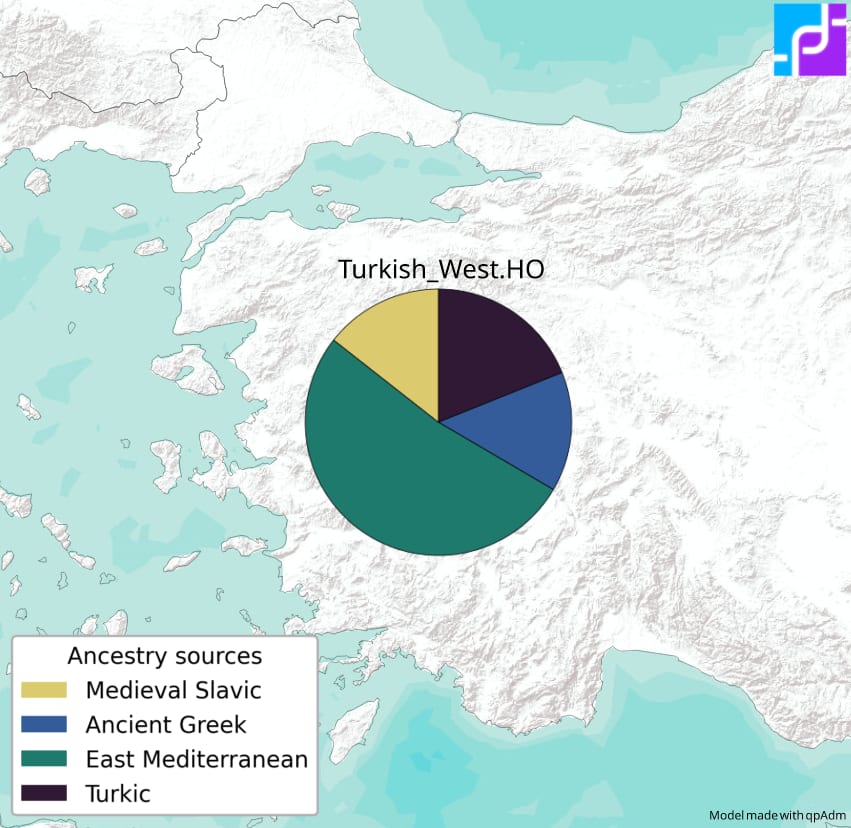
qpAdm modeling shows modern Anatolian Turks carrying ancestry from Neolithic farmers, Yamnaya, and later Iron Age to medieval populations, reflecting a complex mix of local and incoming ancestries.