
Notable Matches · Iconic discoveries
The Bog People of Denmark
The Bog People of Denmark (c. 800 BCE–100 CE · Jutland and the Danish isles, Denmark): published ancient DNA, 8 sequenced genomes, and how close your own Global25 coordinates come — free with every Ancestrify G25 report.
The dossier
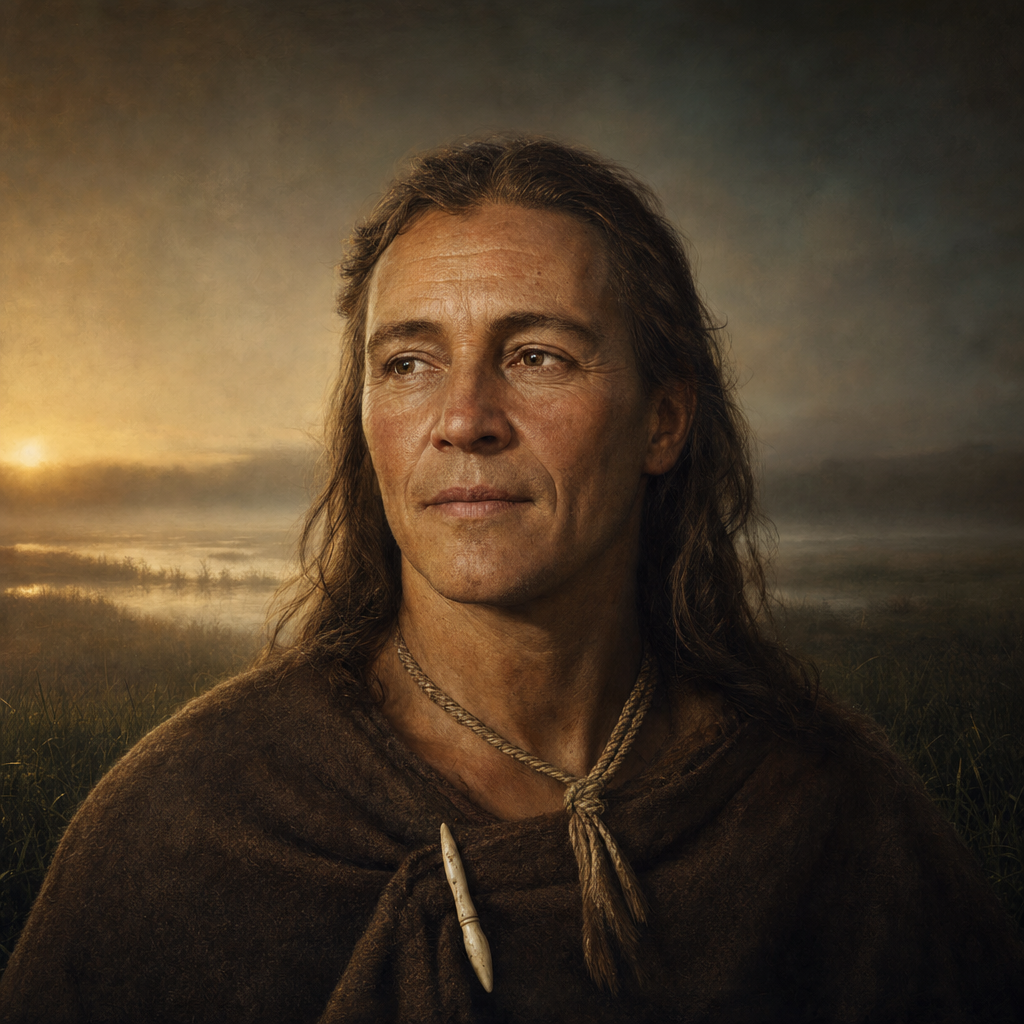
- Catalog tier
- Iconic discoveries
- Period
- c. 800 BCE–100 CE
- Found
- Jutland and the Danish isles, Denmark
- Sequenced genomes
- 8 (CGG022099, CGG022103, CGG023274, CGG023270, CGG023272, CGG021421, CGG017610, CGG016034)
Who they were
To the Iron Age peoples of Denmark, the bogs were doors to the otherworld. Into their dark water went offerings of every kind — weapons, wagons, butter, great cauldrons, and sometimes people. More than five hundred bog dead are known from Denmark alone, spanning the centuries from the late Bronze Age into the Roman Iron Age. Where the peat ran acid it tanned skin and hair into the famous bog mummies; where the water ran limy it kept instead the bones, the quieter bog skeletons whose stories are read today in their genomes. These individuals were recovered from wetlands across Jutland, Zealand, Lolland and Falster — men and women given to the sacred bogs by communities whose reasons, reverent or fearful, the water has kept to itself.
The genome-wide data behind this entry was published in Steppe Ancestry in Western Eurasia and the Spread of the Germanic Languages.
How your distance is measured
Every Ancestrify Global25 report includes the free Notable Matches lens: your coordinates are compared to every sequenced member of every catalog entry, and the distance to the closest member is reported — a Euclidean distance in the same 25-dimensional space the Distance lens uses. Because these are a small group of real individuals, not a population average, distances naturally run larger than population distances — that is expected, not a poor result. And one thing is never claimed: a small distance means similar ancestry composition, not that the Bog People of Denmark are your ancestor. See how it looks in the live demo or read about the full G25 analysis.
Questions
Who were the Bog People of Denmark?
The Bog People of Denmark (c. 800 BCE–100 CE, Jutland and the Danish isles, Denmark) are one of the Iconic discoveries entries in our Notable Matches catalog, represented by 8 sequenced ancient genomes published in the study "Steppe Ancestry in Western Eurasia and the Spread of the Germanic Languages".
What does "matching" the Bog People of Denmark mean?
Your Global25 coordinates are compared to the entry's sequenced members and the distance to the closest one is reported — a Euclidean distance in the same 25-dimensional reference space the Distance lens uses. A notable entry is one person or one small burial group, not a population average, so distances naturally run larger than population distances.
Are they my ancestor?
No — and no DNA test can show that. A small distance means your genome sits near theirs in a shared reference space: similar ancestry composition, not descent. Ancestrify never claims a notable individual is your ancestor or relative.
How do I see my own distance to the Bog People of Denmark?
Notable Matches is a free lens on every Ancestrify Global25 report — never sold separately. Order the G25 analysis (29.99 EUR), and your report ranks your coordinates against the full catalog, with a portrait, dossier and map for every entry. The public demo shows the lens with example data.
More from the catalog
The catalog holds every published entry across three tiers — browse the full Notable Matches directory. Nearby entries:
The La Tène Celts of Bohemiac. 430–230 BCE
The Vergina Royal Tombsc. 400–350 BCE
The Carthaginiansc. 600–146 BCE
The Pazyryk Horse-Lordsc. 500–300 BCE
The Greeks of Ambraciac. 550–150 BCE
The Qin Ancestorsc. 400–200 BCE
The Lost City of Teneac. 525 BCE–200 CE
The Thraciansc. 800–100 BCE
The Gauls of the Aisnec. 500–400 BCE
The Soldiers of Himera480 BCE
The Dauniansc. 630–340 BCE
The Etruscansc. 800–100 BCE