
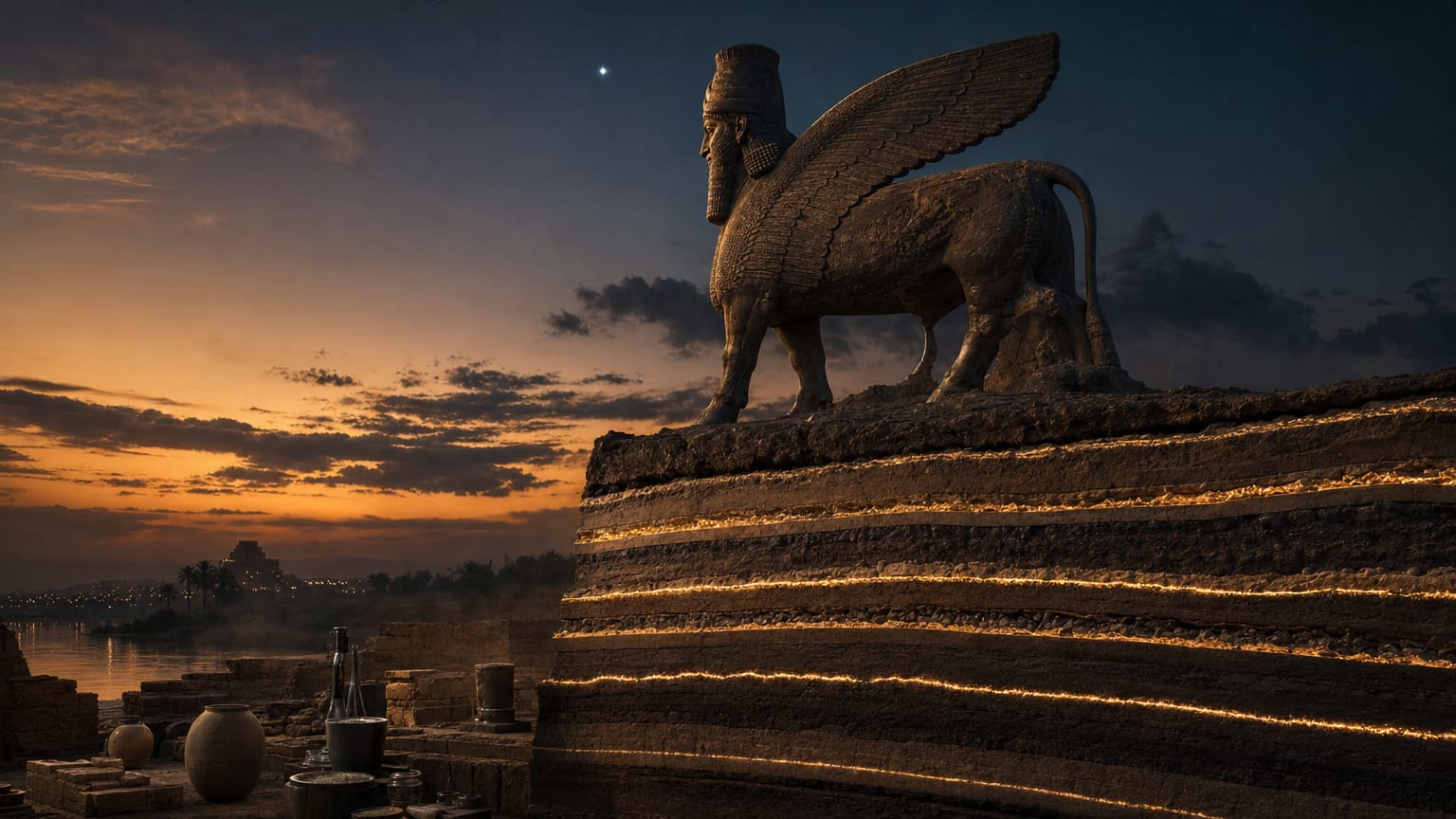
Assyrian DNA: ancient Mesopotamian origins and what genetics can actually show
What ancient DNA and modern genetic studies say about Assyrian ancestry: deep Mesopotamian roots, two millennia of documented endogamy, the missing ancient transect, and how to read G25 and qpAdm results for an Assyrian genome.
- The deep layers of northern Mesopotamia
- What modern Assyrian samples show
- The missing piece: an ancient transect
- Reading your own results
- Frequently asked questions
- Are Assyrians genetically distinct from their neighbours?
- Do Assyrians descend from ancient Mesopotamians?
- What can a DNA test actually tell an Assyrian customer?
- Sources and further reading
Related posts

English DNA: ancient origins from the Beaker reset to the Anglo-Saxon century
England has ancient DNA's best-measured migrations: a Beaker-era turnover, a mid-Bronze Age Celtic-era influx, the quantified Anglo-Saxon settlement and the Danelaw. What each layer left in English genomes, and how to read yours.
4 min read
Egyptian DNA: ancient origins from the Old Kingdom genome to the modern Nile
Egypt finally has ancient genomes: what the Old Kingdom and mummy-era samples show about ancient Egyptian ancestry, how the modern Nile gene pool differs, and how to read an Egyptian genome honestly.
4 min read
Serbian, Croatian and Bosniak DNA: one gene pool, three nations, measured
Ancient DNA on the western Balkans: the Illyrian-era base, the measured Slavic-era arrival, why the world's highest I2a frequencies sit in Bosnia — and why the three nations' genomes overlap almost completely.
3 min read