
Notable Matches · Iconic discoveries
The Medieval Venosans
The Medieval Venosans (8th century CE · Venosa, Basilicata, Italy): published ancient DNA, 9 sequenced genomes, and how close your own Global25 coordinates come — free with every Ancestrify G25 report.
The dossier
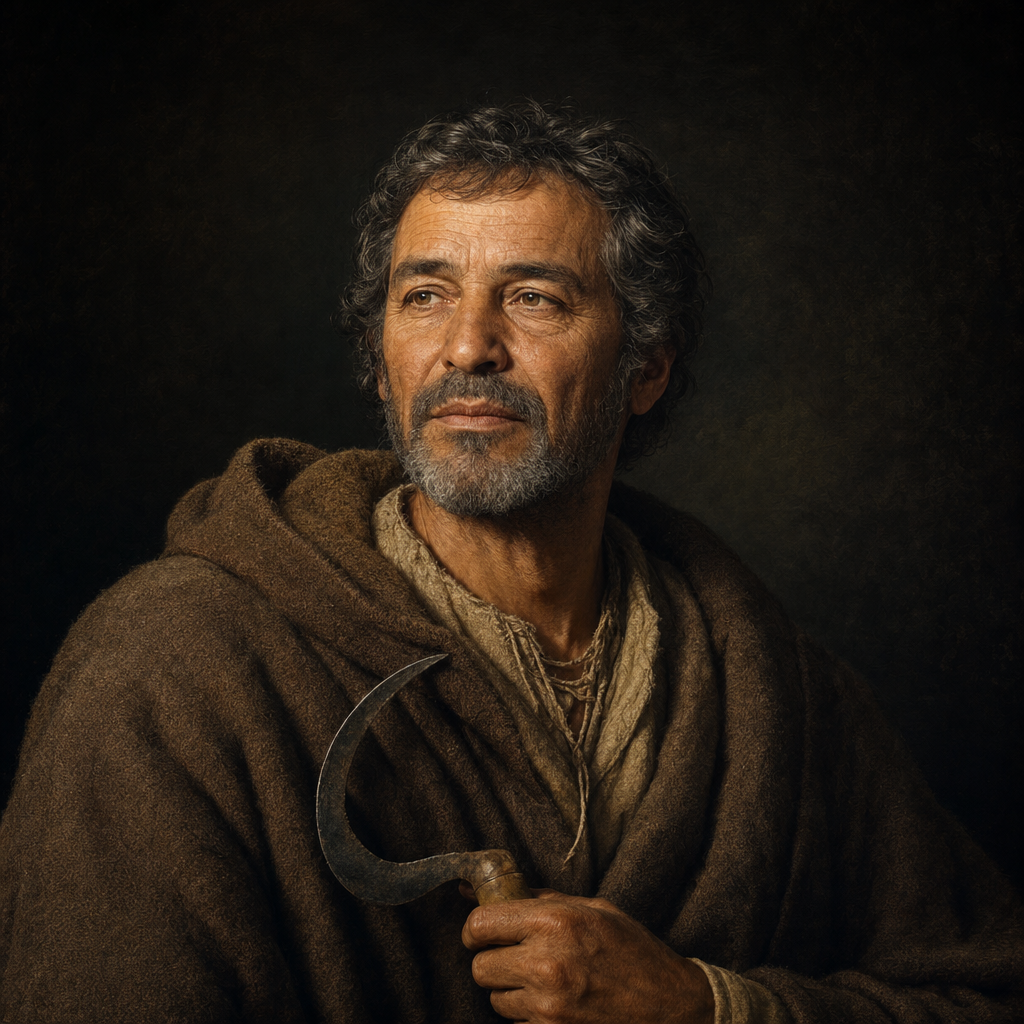
- Catalog tier
- Iconic discoveries
- Period
- 8th century CE
- Found
- Venosa, Basilicata, Italy
- Sequenced genomes
- 9 (VEN001.AG, VEN013.AG, VEN009.AG, VEN006.AG, VEN005.AG, VEN015.AG, VEN012.AG, VEN010.AG, VEN016.AG)
Who they were
In the eighth century CE, the people of Venosa buried their dead over the ruins of the Roman baths of Venusia — the old colony that gave the world the poet Horace, by then a town of the Lombard Duchy of Benevento. Their genomes carry a quiet revelation about southern Italy: they are already, recognisably, southern Italians. Thirteen hundred years ago the south's gene pool was essentially complete — a bridge between Europe and the eastern Mediterranean that the centuries since have barely moved. While northern invaders were reshaping Tuscany and the Po plain, the Mezzogiorno of these farmers and townsfolk simply endured, passing its ancestry down to the region's people almost unchanged to this day.
The genome-wide data behind this entry was published in The origin and legacy of the Etruscans through a 2000-year archeogenomic time transect.
How your distance is measured
Every Ancestrify Global25 report includes the free Notable Matches lens: your coordinates are compared to every sequenced member of every catalog entry, and the distance to the closest member is reported — a Euclidean distance in the same 25-dimensional space the Distance lens uses. Because these are a small group of real individuals, not a population average, distances naturally run larger than population distances — that is expected, not a poor result. And one thing is never claimed: a small distance means similar ancestry composition, not that the Medieval Venosans are your ancestor. See how it looks in the live demo or read about the full G25 analysis.
Questions
Who were the Medieval Venosans?
The Medieval Venosans (8th century CE, Venosa, Basilicata, Italy) are one of the Iconic discoveries entries in our Notable Matches catalog, represented by 9 sequenced ancient genomes published in the study "The origin and legacy of the Etruscans through a 2000-year archeogenomic time transect".
What does "matching" the Medieval Venosans mean?
Your Global25 coordinates are compared to the entry's sequenced members and the distance to the closest one is reported — a Euclidean distance in the same 25-dimensional reference space the Distance lens uses. A notable entry is one person or one small burial group, not a population average, so distances naturally run larger than population distances.
Are they my ancestor?
No — and no DNA test can show that. A small distance means your genome sits near theirs in a shared reference space: similar ancestry composition, not descent. Ancestrify never claims a notable individual is your ancestor or relative.
How do I see my own distance to the Medieval Venosans?
Notable Matches is a free lens on every Ancestrify Global25 report — never sold separately. Order the G25 analysis (29.99 EUR), and your report ranks your coordinates against the full catalog, with a portrait, dossier and map for every entry. The public demo shows the lens with example data.
More from the catalog
The catalog holds every published entry across three tiers — browse the full Notable Matches directory. Nearby entries:
The Early Slavsc. 600–900 CE
The Langobards of Collegnoc. 640–750 CE
The Merovingians of Koksijdec. 620–750 CE
The Avars of the Vienna Basin8th century CE
The Kulubnarti Nubiansc. 650–1000 CE
The Skeleton Lake of Roopkundc. 800 CE and 1800 CE
The Maya of Chichén Itzác. 600–1100 CE
The Visigoths of Iberiac. 480–770 CE
The Lovelock Cave Peoplec. 150–1400 CE
The Anglo-Saxonsc. 450–750 CE
The Komani-Kruja Culturec. 800–950 CE
The Early Bavariansc. 500–600 CE