
Notable Matches · Historical figures
The Grande Armée of Vilnius
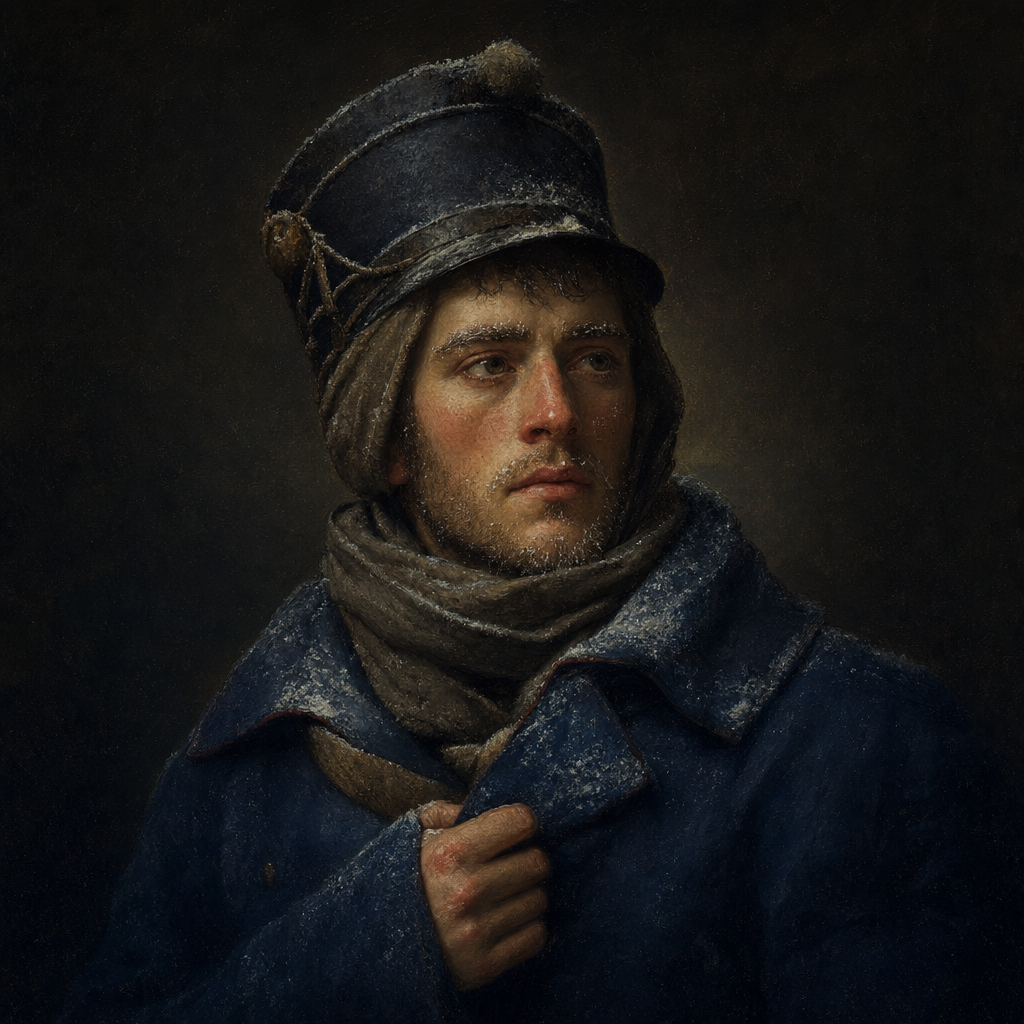
The Grande Armée of Vilnius (December 1812 CE · Šiaurės miestelis, Vilnius, Lithuania): published ancient DNA, 12 sequenced genomes, and how close your own Global25 coordinates come — free with every Ancestrify G25 report.
The dossier
- Catalog tier
- Historical figures
- Period
- December 1812 CE
- Found
- Šiaurės miestelis, Vilnius, Lithuania
- Sequenced genomes
- 12 (YYY083A, YYY093A, YYY092B, YYY091B, YYY089B, YYY097B, YYY085B, YYY084B, YYY087A, YYY088B, YYY095A, YYY094A)
Who they were
Of the half million soldiers Napoleon led into Russia in June 1812, a frozen remnant of seventy thousand staggered into Vilnius that December — and tens of thousands never left it. In 2001, construction work in the north of the city opened a trench holding at least 3,269 of them, buried where they fell to cold, hunger and fever, their uniforms' buttons naming more than forty regiments of the emperor's multinational army; among them lay a handful of women, the cantinières who followed the drum. In a grim irony, the trench was a defensive earthwork the Grande Armée itself had dug months before. Genomes from their teeth rewrote the story of what killed them: not the long-blamed typhus, but paratyphoid fever and louse-borne relapsing fever, stalking the retreat mile by mile.
The genome-wide data behind this entry was published in Paratyphoid fever and relapsing fever in 1812 Napoleon's devastated army.
How your distance is measured
Every Ancestrify Global25 report includes the free Notable Matches lens: your coordinates are compared to every sequenced member of every catalog entry, and the distance to the closest member is reported — a Euclidean distance in the same 25-dimensional space the Distance lens uses. Because these are a small group of real individuals, not a population average, distances naturally run larger than population distances — that is expected, not a poor result. And one thing is never claimed: a small distance means similar ancestry composition, not that the Grande Armée of Vilnius are your ancestor. See how it looks in the live demo or read about the full G25 analysis.
Questions
Who were the Grande Armée of Vilnius?
The Grande Armée of Vilnius (December 1812 CE, Šiaurės miestelis, Vilnius, Lithuania) are one of the Historical figures entries in our Notable Matches catalog, represented by 12 sequenced ancient genomes published in the study "Paratyphoid fever and relapsing fever in 1812 Napoleon's devastated army".
What does "matching" the Grande Armée of Vilnius mean?
Your Global25 coordinates are compared to the entry's sequenced members and the distance to the closest one is reported — a Euclidean distance in the same 25-dimensional reference space the Distance lens uses. A notable entry is one person or one small burial group, not a population average, so distances naturally run larger than population distances.
Are they my ancestor?
No — and no DNA test can show that. A small distance means your genome sits near theirs in a shared reference space: similar ancestry composition, not descent. Ancestrify never claims a notable individual is your ancestor or relative.
How do I see my own distance to the Grande Armée of Vilnius?
Notable Matches is a free lens on every Ancestrify Global25 report — never sold separately. Order the G25 analysis (29.99 EUR), and your report ranks your coordinates against the full catalog, with a portrait, dossier and map for every entry. The public demo shows the lens with example data.
More from the catalog
The catalog holds every published entry across three tiers — browse the full Notable Matches directory. Nearby entries:
Gregor Mendel1822–1884 CE
The Fallen of Le MansDecember 1793 CE
Ludwig van Beethoven1770–1827 CE
Jean-Paul Marat1743–1793 CE
The Cretans of 19411941 CE
The Kronan Sailor1 June 1676 CE
George Bähr1666–1738 CE
The Soldiers of the Reapers' War1652 CE
Philip Calvert1626–1682 CE
Bishop Peder Winstrup1605–1679 CE
The Báthory Family1550–1600 CE
Prince Christophorus Corvinus1499–1505 CE